


🌿 Amphawa, Thailand – A Wooden Canal Town That Comes Alive on Weekends
Amphawa is one of my favourite places near Bangkok.
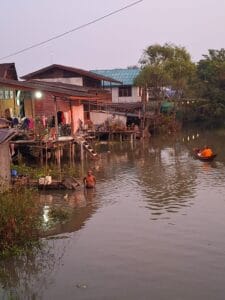 🏠 The town is known for its old wooden houses built along the canal. Many of them sit directly on the water, with small terraces and staircases leading down to passing boats. It feels traditional, compact and very different from modern Bangkok.
🚤 During the day, boats move quietly through the canals. The real activity happens on the riverside walkways. In the late afternoon, food stalls open, seafood is grilled on the banks, and the wooden houses light up as evening arrives.
👨👩👧👦 On weekends, Amphawa attracts both Thai families and day visitors from Bangkok. It is lively, but still more local and less aggressive than bigger floating markets.
In this guide, you’ll find what there is to do, what to explore in the area, how to get there, where to stay and why this is such a true Travelglaze destination.
Explore this guide step by step:
What to Do in Amphawa ·
What to Do Around Amphawa ·
How to Get to Amphawa ·
Where to Stay in Amphawa ·
FAQ About Visiting Amphawa
Some links in this article are affiliate links, shared as practical options to keep planning simple.
Amphawa is compact, but there is enough to fill an afternoon and evening without rushing.
Here is exactly what you can do — and how to do it well.
🍤 1. Walk the Amphawa Floating Market (Weekend Only)
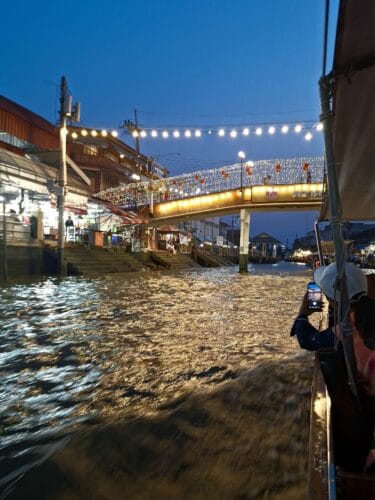
🗓 Open mainly Friday–Sunday
⏰ Best time: 16:00–19:00
The floating market stretches along both sides of the main canal. It is not very large. You can walk from one end to the other in about 10–15 minutes.
Important to know:
Most food is cooked on the wooden walkways, not on boats.
Boats mainly pass through the canal and add atmosphere.
Seating is simple: small plastic stools or low tables.
💰 Prices are local, not “tourist Bangkok” prices.
If you want fewer crowds, arrive before 16:30.
If you want atmosphere, go around sunset.
🚤 2. Take a Firefly Boat Tour
📍 Departure: small ticket counters along the main canal
💰 Price: usually 60–100 THB per person (shared boat)
⏳ Duration: about 1 hour
🕖 Departure: after dark (around 18:30–19:30)
You buy a simple paper ticket and wait until the boat fills.
The longtail boat takes you into darker side canals outside the busy centre. The fireflies sit in trees along the water.
Important:
Fireflies are seasonal. Rainy season (roughly May–October) gives better chances.
It is not a “show”. Some evenings you see many. Some evenings only a few.
Travelglaze tip: Wear mosquito repellent.
🌳 3. Visit Wat Bang Kung – The Temple Inside a Tree
📍 About 10 minutes from Amphawa
💰 Free entry
⏳ 30–60 minutes
Wat Bang Kung is one of the most unusual temples in Thailand.
From the outside, it almost looks abandoned. The small brick chapel is completely wrapped by the roots of a huge banyan tree. The tree has grown around the building and now forms a natural shell.
Inside, there is a small golden Buddha statue. The space is dark and intimate. It feels very different from large Thai temple complexes.
But the area around the temple is much bigger than people expect.
Outside the tree temple you will find:
🗿 Large warrior statues
🥊 Muay Thai fighter statues
🐅 Animal enclosures (small zoo-style area)
It feels slightly surreal. Part spiritual site, part historical park, part local attraction.
This temple is also included in many longtail boat tours that visit five temples along the canal system. These boat trips usually take 2–3 hours and start from Amphawa. Wat Bang Kung is the highlight of that route.
Travelglaze tip: If you enjoy unusual places and a slightly mysterious atmosphere, this stop is worth it.
🏡 4. King Rama II Memorial Park
📍 Walking distance from the floating market
💰 Small entrance fee
⏳ 45–90 minutes
King Rama II Memorial Park is one of the most beautifully maintained cultural parks in the region.
It is dedicated to King Rama II, who was born in this area and is known for promoting Thai arts and literature.
The park contains:
🏠 Traditional Thai wooden houses
🌺 Carefully landscaped gardens
🎎 Cultural exhibitions with life-sized figures
📜 Displays about Thai poetry and history
The wooden houses are excellent examples of traditional Thai architecture. Raised structures, open verandas and intricate wood details show how people used to live along the waterways.
Inside, you will see scenes from Thai daily life recreated with detailed figures. It gives context to what you see in Amphawa itself.
Compared to the busy market area, the park feels calm and structured.
Travelglaze tip: If you like history, architecture or cultural context, this is one of the most interesting stops in Amphawa.

Amphawa is about 75 km southwest of Bangkok. Travel time depends on traffic.
Here are your main options.
 1. By Minivan from Bangkok
 1. By Minivan from Bangkok
Departure: Southern Bus Terminal (Sai Tai Mai)
Travel time: 1.5–2 hours
Price: approx. 100–120 THB
Minivans run regularly during the day.
Important:
They may not run late in the evening.
Weekend departures can be busy.
You will usually be dropped near the centre of Amphawa.
Good option if you want a budget-friendly day trip.
2. By Train (Scenic Route)
 2. By Train (Scenic Route)
Take a train from Bangkok to Mae Klong.
From Mae Klong Railway Market, continue by local transport or short taxi ride to Amphawa (about 10–15 minutes).
This option takes longer but gives you a more local experience.
Good if you want to combine:
Mae Klong Railway Market
Amphawa Floating Market
3. By Car
 3. By Car
Driving is straightforward.
Travel time: about 1.5 hours (without heavy traffic).
Parking:
Public parking areas near the floating market
Small local parking lots
Some guesthouses offer parking
A car gives you flexibility to:
Visit Wat Bang Kung
Explore salt fields
Combine multiple markets
Visit coconut sugar farms
For a weekend visit with multiple stops, this is the easiest option.
Travelglaze tip: You can also use a taxi, grab or bolt car
4. Guided Day Trip from Bangkok
 4. Guided Day Trip from Bangkok
If you prefer everything arranged, you can join a day tour that combines:
Mae Klong Railway Market
Amphawa Floating Market
Transport is included, which removes the adventure of finding buses or trains.
🌿 Travelglaze Moment
My Stay: Baan Rak Homestay
I stayed 5 days at Baan Rak Homestay, and it fits perfectly with the Amphawa atmosphere. That may sound long for a small town like Amphawa, but it allowed me to completely slow down. After the weekend crowds left, the canals became quiet again. Mornings were peaceful. Evenings were calm. 
The property consists of several colourful rooms spread across different wooden buildings. Each room has its own style. Not luxury, but comfortable and well maintained.
Inside you’ll find:
Air conditioning
Private bathroom
Good bed
Bright colours and personal decoration
There is a common living room filled with vintage objects and old furniture. It feels lived-in and authentic.
Outside, a terrace sits directly on the canal:
Low tables
Large cushions
Quiet water in front of you
It is located on a calmer section of the canal, away from the main crowds.
🍽 Breakfast Matters
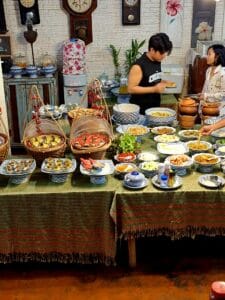 Breakfast here is exceptional.
You can choose from several Thai dishes that are freshly prepared and nicely presented. Expect a mix of savoury options, fruit and local flavours.
It is not a large hotel buffet, but a carefully prepared selection that reflects real Thai cuisine.
If you prefer something simple, you can toast bread as well.
You can also have lunch and dinner here. The food is home-style Thai cooking, served in the relaxed canal-side setting.
🚗 Practical Detail
The owner is very helpful and may assist with local transport if needed. That can be useful if you do not have a car.
Baan Rak Amphawa Homestay
351 Moo 10, Amphawa Subdistrict
Amphawa District
Samut Songkhram 75110
Thailand
