


Are most roads in Namibia and Botswana gravel?
❌ Myth.
Most major roads in both countries are asphalt, well-marked, and surprisingly easy to drive. Routes between big towns — Windhoek, Swakopmund, Maun, Kasane — are smooth and fast. 
The confusion comes from a few famous areas: the long gravel road to Sossusvlei, parts of Damaraland, and the deep-sand tracks inside Moremi. These are exceptions, not the rule.
💡 Fun fact: Namibia has one of the lowest traffic densities in the world — sometimes less than one car per kilometre. That’s great for peaceful driving, but it also means help can be far away. Carry more water than you think you’ll need.
Do you need a 4×4 for most of Namibia and Botswana?
❌ Myth.
Most of Namibia and Botswana can be done on normal asphalt and good gravel roads in a regular car. Long-distance routes between cities and towns are designed for 2×4 vehicles, not only for heavy off-road cars.
Where a 4×4 really makes a difference is inside national parks and on sandy side roads. In Chobe National Park, deep sand and riverfront tracks are much easier and safer with 4×4. In Etosha, a 2×4 is usually fine in dry season, but a higher car (or 4×4) is more forgiving on rough, corrugated tracks and after heavy rain.
💡 Travelglaze tip: If your trip is mainly town-to-town with a few day visits to Etosha or Chobe, a regular car is enough. If you plan lots of game drives on sandy tracks, invest in a 4×4 — it’s not luxury, it’s peace of mind.
Is it dangerous to drive at night?
✅ True.
Night driving is one of the biggest risks in both Namibia and Botswana. Wildlife uses warm road surfaces after sunset, and animals like kudu, oryx and cows often stand still in headlights instead of moving away. Their height and weight make collisions extremely serious.
There are also no streetlights, and on gravel roads dust hangs in the air long after a car passes — reducing visibility to just a few metres. Even short drives become unpredictable, which is why locals avoid travelling after dark.
💡 Travelglaze tip: Plan all driving so you arrive before sunset. If your schedule is tight, leave earlier — not faster. It’s the safest (and calmest) way to travel in southern Africa.
Do border crossings take a long time?
➖ Half-true.
Border posts between Namibia and Botswana are usually efficient, but the experience varies widely. Smaller crossings like Ngoma Bridge or Mohembo are often done in 20–40 minutes, while busier posts can take longer depending on staffing and lunchtime breaks.
You’ll typically need your passport, visa, car rental papers, a cross-border letter, and in Botswana a small road permit fee. None of it is complicated — it just takes time when several overland trucks arrive at once.
Most delays happen because travellers don’t have the right documents ready, not because the border itself is slow.
💡 Travelglaze tip: Keep all paperwork in one easy-to-reach folder. It sounds simple, but it can cut your crossing time in half.
Do you need a visa to enter Namibia?
➖ Half-true. (2025 CHECK before going— rules are changing.)
Namibia is currently rolling out a new eVisa system. Some nationalities that used to enter visa-free must now apply online before arrival.
Dutch, Belgian and many EU travellers were traditionally exempt, but recent updates show that this may no longer be the case for all categories of travel. The new system is being introduced in phases, and information changes quickly.
Botswana, by contrast, remains visa-free for many nationalities, including visitors from most European countries.
💡 Travelglaze tip: Always check the official Namibian eVisa website or your government’s travel advice before booking. Border officials expect you to have the correct documents ready.
Can you pay by card almost everywhere?
➖ Half-true.
In major towns — Windhoek, Swakopmund, Maun and Kasane — cards work fine. But once you’re in rural areas, things change quickly. Fuel stations, park gates, shuttle drivers, craft stalls and some lodges often switch to cash only, especially during signal drops or power cuts. It’s common enough that even locals carry backup cash.
Currency basics:
Namibia: Payments are made in Namibian dollars (NAD) or South African rand (ZAR). They’re equal in value and used interchangeably.
Botswana: Daily payments require Botswana pula (BWP). Foreign currencies are not accepted in shops, cafés or fuel stations.
US dollars: Not used for normal purchases, but extremely useful as a backup currency. If an ATM is empty, a card machine fails, or you need to pay a park/tour fee at a lodge, USD is often accepted. Most tour companies and visa/park offices are familiar with dollars — as long as bills are clean, modern, and not torn.
💡 Travelglaze tip: Bring $50–$100 in clean USD notes as emergency backup. Keep it separate from your day-to-day cash. It’s not for buying snacks — it’s for solving problems when machines or banks don’t work.
Does Google Maps work reliably if downloaded offline?
✅ True.
Mobile signal disappears often in Namibia and Botswana, especially between towns or inside national parks. But offline maps work extremely well and are often more reliable than trying to navigate live. Even gravel roads and remote tracks are marked correctly, and distances between major towns are accurate.
Signs along the main routes are surprisingly clear, meaning that offline navigation is usually enough — even on long stretches where you won’t see another car for 20–30 minutes.
Just don’t expect real-time traffic or detour suggestions: the apps won’t warn you about corrugation, sand patches or wandering animals.
💡 Travelglaze tip: Download Namibia, Botswana, Etosha, Sossusvlei, Maun and Kasane before you leave Wi-Fi. And take a screenshot of your day’s route — it loads faster when you’re completely offline.
Is crossing borders with a rental car complicated?
➖ Half-true.
Crossing from Namibia into Botswana (and back) sounds intimidating, but with the right paperwork it’s usually straightforward. The biggest issue is that many travellers don’t prepare in advance, and that’s when delays happen.
What you need:
A cross-border letter from the rental company (mandatory).
Proof of vehicle registration.
Insurance that covers both countries.
In Botswana: a small road permit fee (payable in pula or sometimes USD).
If you arrive without the cross-border letter, the border can legally deny entry — and rental companies don’t always issue the document unless you ask for it before pickup.
Once you have the right papers, border agents are usually efficient, friendly and used to handling self-drive travellers.
💡 Travelglaze tip: Request the cross-border letter at the time of booking, not at pickup. It prevents the #1 cause of long border delays.
Is mobile reception good once you leave the towns?
❌ Myth.
Outside Windhoek, Swakopmund, Maun and Kasane, mobile reception becomes unpredictable fast. Entire stretches of highway have no signal at all, and in national parks it’s normal to be offline for hours. Even some lodges only have Wi-Fi near reception or during generator hours.
It’s not dangerous — just something travellers underestimate. Payment machines rely on mobile signal, which is why fuel stations and small cafés sometimes switch to cash only. WhatsApp calls often fail outside towns, and photo uploads can take hours.
Despite this, SIM cards are easy to buy, coverage is improving, and offline navigation works perfectly. You just need to expect pockets of silence along the way.
💡 Travelglaze tip: Buy a local SIM (MTC for Namibia, Mascom for Botswana) and preload data bundles. If the network drops, don’t panic — it usually returns when you approach the next settlement.
Is public transport a practical way to travel in Namibia and Botswana?
❌ Myth.
Public transport exists, but it’s limited and not designed for travellers. Minibuses run between major towns, but they leave only when full, make many stops, and don’t reach key travel areas like Sossusvlei, Etosha, the Okavango Delta or Chobe Riverfront.
For taxis, the situation varies:
In Windhoek and Swakopmund, taxis work well — but most are shared taxis, meaning they pick up multiple passengers along the way.
In Botswana, especially in smaller towns, taxi services are basic and often not metered.
Neither country has a system of long-distance tourist shuttles like Southeast Asia or Europe. Self-drive or guided tours are the only reliable ways to move between parks, lodges and rural areas.
💡 Travelglaze tip: If you use taxis in cities, ask your lodge to call a trusted driver. Avoid hailing taxis on the street — not unsafe, but unpredictable in routing and pricing.
Will you see wildlife everywhere you drive?
➖ Half-true.
Namibia and Botswana look wild, but most animals stay inside protected areas or near water sources — not along highways. On long stretches between towns, you may see nothing for hours.
Inside parks, the story changes completely: Etosha, Chobe, and the Okavango Delta have some of the highest wildlife densities in Africa, with elephants, giraffes, zebras and antelopes often right beside the road.
It’s not guaranteed — but when sightings happen, they’re spectacular.
💡 Travelglaze tip: The best times for wildlife are early morning and late afternoon. If you self-drive, plan your day around these two windows.
Are elephants as calm as they look?
❌ Myth.
Elephants in Namibia and Botswana are generally relaxed, but they are still unpredictable, wild animals. Lone bulls (especially in musth) and matriarch herds protecting calves can react suddenly if a vehicle gets too close.
In places like Chobe Riverfront, elephants cross the road frequently, and it’s normal to wait for a herd to pass. Most encounters are peaceful — as long as you give them space and never block their path.
💡 Travelglaze tip: If an elephant flaps its ears wide, turns sideways, or shakes its head, stop immediately and give it room. Reversing slowly is completely normal here.
Do hippos spend most of their time in water because they’re harmless?
❌ Myth.
Hippos look sleepy and slow, but they’re among Africa’s most dangerous animals. They leave the water at night to graze and can run faster than a human for short bursts.
In Botswana — especially around the Okavango Delta — hippo paths often cross lodge walkways or sandy tracks. They’re not aggressive without reason, but they defend their space instantly.
💡 Travelglaze tip: Near rivers or wetlands, always use a guided escort after dark. And never stand between a hippo and the water — that’s their escape route.
Do animals gather around waterholes during the day?
✅ True. In both Namibia and Botswana, waterholes are the heart of daytime wildlife activity. Animals like elephants, zebras, giraffes, wildebeest and springbok come to drink when the sun is strongest — often between 11:00 and 15:00, when humans prefer shade.
Etosha is especially famous for this: you can sit at one waterhole and watch entire herds rotate through, sometimes with predators observing from a distance. It’s one of the best ways to see wildlife without rushing from sighting to sighting.
💡 Travelglaze tip: If the heat gets too much, watch from a shaded hide or from your lodge’s waterhole deck. You’ll often spot more animals by staying still than by driving around.
Do snakes often appear around lodges and campsites?
❌ Myth.
Snakes exist in both Namibia and Botswana, but sightings are far less common than travellers expect. They avoid human noise and vibration, and most lodges keep paths and surroundings tidy to reduce hiding spots. Most visitors finish their trip without seeing a single snake — even after weeks in the bush.
What you’re more likely to encounter are small scorpions, especially in sandy or rocky areas. They usually hide under stones, shoes or camping gear but avoid humans just as much as snakes do. Lodge staff know exactly how to handle both if they appear.
💡 Travelglaze tip: Shake out your shoes in the morning and use a flashlight at night. Not because snakes and scorpions are common — but because easy habits prevent surprises.
Is malaria a risk everywhere in Namibia and Botswana?
❌ Myth — but you must check the region. (CHECK: always verify current health advice)
Most of central and southern Namibia — including Windhoek, Swakopmund, Sossusvlei and Sesriem — is completely malaria-free all year.
The risk increases in the north, especially in:
Northern Botswana (Okavango Delta, Chobe area)
Namibia’s Zambezi Strip (Caprivi)
Parts of Etosha, depending on season
During the rainy months (roughly Nov–Jun) mosquitoes are more active, and travellers heading to these northern regions are often advised to take malaria prophylaxis. In the dry season, the risk drops but never fully disappears in wetland areas.
Medication isn’t needed for southern Namibia, but is commonly recommended for the Okavango Delta, Chobe Riverfront and the Zambezi Strip — especially if you sleep near water.
💡 Travelglaze tip: Bring repellent with DEET, wear long sleeves at dusk, and ask your doctor which tablets fit your itinerary.
Are predators like lions and hyenas easy to spot in the wild?
➖ Half-true.
Lions, hyenas and leopards live in both Namibia and Botswana, but that doesn’t mean you’ll see them on every drive. In Etosha, lions are often found near waterholes or resting under low trees. In Botswana’s Chobe and Savuti areas, they move with the herds — sometimes visible along the road, sometimes deep in the bush.
Hyenas are more active at night and often roam near camps or hide in the heat of the day. Leopards are the hardest to spot: they prefer trees, riverbeds and quiet areas away from traffic.
When you do see predators, it’s memorable — but patience is essential, and some days you’ll see only tracks, not animals.
💡 Travelglaze tip: Look for lion tracks on sandy roads early in the morning. If you see fresh prints, you’re usually not far behind the pride.
Do animals come close to lodges and campsites?
✅ True. In both Namibia and Botswana, lodges and campsites are built inside or near natural habitats, which means wildlife often wanders through at unexpected times. In Etosha and Chobe Riverfront, it’s normal to see zebras, antelopes or giraffes grazing just outside your room.
In Botswana’s Delta and river areas, elephants regularly pass through lodge grounds, and warthogs often nap in the shade near restaurant terraces. These visits aren’t dangerous as long as you stay calm and keep your distance — the animals are used to humans but remain completely wild.
Even fenced camps can have smaller visitors like jackals, mongooses or porcupines after dark. It’s part of the charm, not a reason to worry.
💡 Travelglaze tip: If lodge staff offer an escort after sunset, always use it. Not because animals are aggressive — but because you don’t want to surprise an elephant on your way to dinner.
Are desert animals easy to spot in Namibia’s dry landscapes?
❌ Myth.
Namibia looks wide open, but many desert animals are specialists in camouflage. Oryx, springbok and ostriches are easy to see, but smaller species — like foxes, brown hyenas, bat-eared foxes, and desert-adapted lions — blend almost perfectly into the sand and rocks.
Animals avoid the midday heat by resting under bushes or rocky outcrops, making sightings rare during certain hours. Even in the Namib Desert, some species travel huge distances at night and are nearly invisible during the day.
But Namibia rewards patience: once your eyes adjust, you’ll start noticing tracks, shadows and small movements that reveal the wildlife you thought wasn’t there.
💡 Travelglaze tip: Early morning and late afternoon are the golden hours. If you’re self-driving, plan drives around these times — the desert wakes up when the temperature drops.
Are giraffes, zebras and antelopes always easy to spot?
✅ True — in the right places.
Namibia and Botswana are some of the best countries in Africa for “everyday wildlife.” Even outside national parks, you may see giraffes near dry riverbeds, zebras crossing open plains, or springbok grazing along the roadside. These animals are highly visible during the day and often gather in groups, which makes spotting them surprisingly easy.
Etosha’s white pan acts like a natural stage — animals stand out clearly against the pale background. In Botswana, the Chobe Riverfront has huge herds that move between water and woodland all day long. Sightings here can feel almost effortless.
It’s one of the reasons these countries are ideal for calm, comfortable wildlife travel: you don’t need to rush from sighting to sighting. The animals often come to you.
💡 Travelglaze tip: If you love relaxed wildlife watching, pair Etosha with Botswana’s riverfront areas — they complement each other perfectly. Click here for my itinerary
Are lodges in Namibia and Botswana always basic?
❌ Myth.
Lodges in Namibia and Botswana offer some of the most comfortable stays in Africa — even in remote areas. Rooms often include real beds, private bathrooms, fans or air-conditioning, decks with desert or river views, swimming pools and excellent meals. 
In national parks, many lodges overlook waterholes where animals come to drink, so you can enjoy wildlife without rushing out at sunrise. The service is generally warm, calm and thoughtful — a welcome break after long driving days.
Camping exists, but it’s usually basic: shared ablutions, limited shade, and very few comforts unless you bring your own gear. Most comfort travellers choose lodges for good reason — they make the trip easier, safer and far more relaxing.
💡 Travelglaze tip: Book lodges early if you travel in peak season. Popular spots in Etosha and Chobe sell out months ahead — especially the ones overlooking waterholes.
Is the local food always spicy?
❌ Myth.
Namibian and Botswanan cuisine is much milder than many travellers expect. Local dishes focus on grilled meats (braai), stews, maize porridge (pap), beans and fresh vegetables. Spice levels are low — the flavour comes more from slow cooking than from heat.
In tourist areas, menus usually include international options: pasta, salads, stir-fries, fish, burgers and great baked goods. Lodges in Botswana especially are known for generous meals and homemade desserts.
Those expecting chilli-heavy African cuisine are often surprised by how mild and comforting the dishes are.
💡 Travelglaze tip: Try “vetkoek” (fried dough bread) if you see it — it’s simple, filling and surprisingly addictive.
Is tap water unsafe everywhere?
➖ Half-true.
Tap water in major Namibian towns — Windhoek, Swakopmund, Walvis Bay — is treated and generally safe to drink. Many lodges also filter their water. But in rural areas, desert regions and along long-distance routes, tap water may taste salty, metallic or be unsuitable for drinking.
Botswana is even more varied: some lodges have purified water on tap, while others ask you to use bottled or filtered water only.
It’s not universally unsafe, but you can’t rely on tap water everywhere.
💡 Travelglaze tip: Carry a reusable bottle and refill at lodges. It reduces plastic waste and keeps you hydrated on long drives.
Is the food at lodges usually good?
✅ True.
One of the biggest surprises for travellers in Namibia and Botswana is the quality of lodge meals. Even remote lodges serve generous breakfasts, fresh salads, grilled meats, soups, homemade bread and excellent desserts. Many use locally sourced produce — think game meat, fresh vegetables, marula-based sauces and warm baked treats. 
In Botswana, especially along the Chobe Riverfront, lodges are known for three-course dinners and afternoon tea. In Namibia, popular spots around Etosha and Swakopmund offer buffets or set menus that feel far more relaxed and refined than most people expect from a safari trip.
Vegetarian options are increasingly common, though vegan choices can still be limited in rural areas.
💡 Travelglaze tip: If you have dietary restrictions, email the lodge in advance — they’re usually very accommodating.
Do most lodges offer reliable electricity and charging options?
➖ Half-true.
Most mid-range and higher-end lodges in Namibia and Botswana have reliable electricity, powered by generators, solar systems or hybrid setups. Charging phones, cameras and power banks is usually possible — but not always all day.
In remote lodges, generators may run only during set hours (typically early morning and evening), and occasional power cuts happen during storms or changeovers.
Plug types are different in each country:
Namibia: Mostly Type M (large round three-pin plug — same as South Africa).
Botswana: Mostly Type G (UK-style three-pin plug), sometimes with a few older Type M sockets in older buildings.
Because Type M is not included on most universal adapters, travellers need two separate adapters to cover both countries.
💡 Travelglaze tip: Pack one Type M adapter for Namibia and one Type G adapter for Botswana. Add a small multi-USB charger so you can power everything during generator hours.
Do lodges offer laundry services during a trip?
✅ True — but with limits.
Most mid-range and higher-end lodges in Namibia and Botswana offer same-day or next-day laundry, which is a huge relief on long itineraries. Clothes are usually hand-washed and sun-dried, which works well in the region’s dry climate.
But there are a few important exceptions:
Laundry is often not available on rainy days, because clothes can’t dry.
Some lodges don’t wash underwear due to cultural norms, so travellers must do those items themselves.
Very remote bush camps may only handle small loads or offer laundry every second day to limit water use.
For most travellers, laundry service makes packing lighter and keeps the trip far more comfortable — especially after dusty desert days or boat trips on the Chobe River.
💡 Travelglaze tip: Pack quick-dry underwear and one small bottle of travel detergent. It saves stress on days when lodge laundry isn’t available.
Do lodges and parks require tipping, or is it optional?
➖ Half-true.
Tipping isn’t mandatory in Namibia or Botswana, but it is a normal part of the travel culture — especially in lodges, on game drives and during transfers. Staff salaries in remote areas are modest, and tips make a real difference.
Most lodges have a shared tip box so the entire team benefits, from kitchen staff to housekeepers. For guides and trackers, individual tipping is common because their work is specialised and often the highlight of a safari.
There’s no fixed rule, but travellers usually tip the equivalent of NAD/BWP 50–100 per person per day at lodges, and a little more for exceptional guiding in wildlife areas.
💡 Travelglaze tip: Keep a small envelope with tip money so you don’t have to scramble for cash on departure. When in doubt, ask the lodge manager what’s customary — they’re used to the question.
Do lodges provide toiletries and basic amenities?
🟢 True.
Most mid-range and higher-end lodges in Namibia and Botswana provide a full set of toiletries — shampoo, conditioner, body wash, lotion and hand soap. Many use eco-friendly refillable bottles to reduce plastic waste, especially in desert and wildlife regions.
Rooms typically include fresh towels, extra blankets for cold nights, bedside lamps and drinking glasses. In areas where mosquitoes are common — such as northern Namibia, the Zambezi Strip and much of Botswana — lodges also provide mosquito nets, coils or repellent.
In malaria-free areas like Sossusvlei, Swakopmund and southern Namibia, nets are not always needed and are therefore not standard in every lodge.
Overall, amenities are far more complete than most travellers expect, even in remote safari tents.
💡 Travelglaze tip: Bring a small personal kit for the few items lodges rarely offer: face wash, lip balm, after-sun and medication. Everything else is usually taken care of.
Are toilets in Namibia and Botswana mostly basic or hard to find?
➖ Half-true.
In cities and large towns, toilets are modern and similar to those in Europe — clean, well-maintained and easy to find in cafés, malls and petrol stations.
Once you drive into rural areas, national parks or desert regions, facilities become much simpler. Along long-distance routes (especially between Sesriem, Solitaire, Walvis Bay, Etosha and Maun) you might not find a single public toilet for hours.
Most picnic sites in parks have long-drop toilets — basic but functional. Some have running water, some don’t.
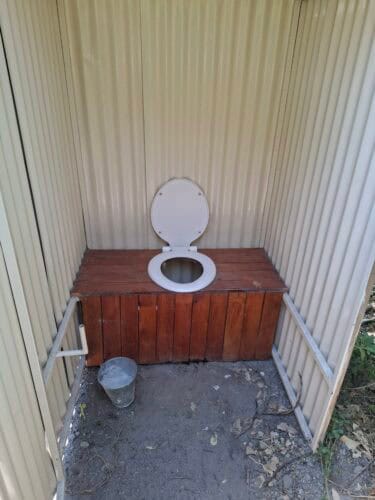
And then there’s the famous local term: “bushy bushy.”
This simply means finding a private spot in the bush when nature calls — a normal and practical part of travel in remote desert or savannah areas. It’s not glamorous, but locals use the term casually, and rangers often say it with a smile when facilities are far away.
Lodges, however, always offer clean, comfortable bathrooms — even in remote safari camps. Many safari tents have en-suite flushing toilets and proper showers.
💡 Travelglaze tip: Keep a small “comfort kit” in your daypack: tissues, hand gel, a plastic bag and a spare roll of toilet paper. It makes bushy bushy moments much easier when facilities are far between.
