What Amsterdam Is Really Like (And What Surprises Most Visitors)
For many travellers, Amsterdam is a city they have seen in photos — canals, narrow houses, bicycles and maybe a few famous museums.
But what the city actually feels like is often quite different once you arrive.
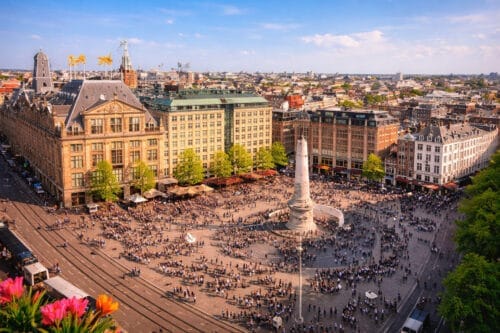
Some visitors expect a large, busy capital. Others imagine a quiet, picture-perfect European city. In reality, Amsterdam sits somewhere in between — and that’s where most of the surprises begin.
🌿 Distances are smaller than expected, some areas are much busier than anticipated, and the atmosphere can change quickly from one neighbourhood to the next.
📍 In this guide, you’ll discover what Amsterdam is really like beyond the images — the small things that often surprise visitors, and what that means for how you experience the city.
Jump ahead to:
· Bicycles Are Part of the City’s Culture
Smaller Than You Expect
One of the first things many visitors notice is how compact Amsterdam actually is.
Distances between major sights are much shorter than expected. What looks far apart on a map can often be reached within 10 to 20 minutes on foot. This changes how you experience the city.
🌿 Instead of planning full days packed with transport and long routes, Amsterdam is a place where you can move slowly and adjust as you go. It’s easy to walk from a busy street into a quiet neighbourhood without really planning it.
🚲 At the same time, the city can feel busy — not because it is large, but because so many people share the same compact space. Narrow streets, canals and cyclists all move through the same areas.
📍 This is also why choosing where you stay matters less than in bigger cities. You are rarely far away from anything, and it’s easy to return to your hotel or take a break during the day.
👉 If you want a simple overview of how the city is structured and where the main sights are located, you can explore the Amsterdam highlights here.
Bicycles Are Part of the City’s Culture
Cycling in Amsterdam is not just a way to get around — it is part of how the city has developed over time.
🚲 The historic centre was never designed for cars. Streets are narrow, distances are short, and for many residents a bicycle is simply the most practical way to move through the city. That’s why bikes are not a “nice extra”, but the main form of transport for daily life.
📍 You’ll also notice that bicycles don’t look new or polished. Many are older, simple and sometimes a bit worn. That is partly practical — and partly cultural.
🔒 Bike theft is common
Amsterdam has a long history of bicycle use, and unfortunately also of bicycle theft. Locals often use strong locks and sometimes even two locks to secure their bike. Expensive-looking bikes are less common in the city centre for that reason.
🚲 Parking is part of the challenge
In many areas, especially near stations and in the centre, you’ll see large clusters of parked bicycles. Finding a place to park can sometimes take a moment, and there are also designated areas where bikes must be placed.
🚲 What this means if you rent a bike
Renting a bike can still be a great way to experience the city, but it helps to see it as part of the local system rather than a relaxed activity. Choose a simple bike, use the locks provided, and be aware of where you leave it — especially in busy areas.
💡 If you prefer a bit more structure, a guided bike tour can be a comfortable way to get used to cycling in Amsterdam. You follow a set route and don’t have to think about navigation.
👉 If you want to understand how traffic works in more detail, you can read the full guide to navigating Amsterdam traffic here.
A City Shaped by Tourism
Amsterdam may feel small, but it receives a large number of visitors throughout the year. That has shaped the city in ways that are not always immediately visible.
🏨 Accommodation is concentrated in the centre
Many hotels, short-term rentals and former residential buildings are located within the historic centre. This means that a large part of the city’s visitors stay in the same areas, which naturally increases activity in those neighbourhoods.
🚢 Tourism arrives in different ways
While large sea cruise ships are no longer allowed to dock in the city centre, Amsterdam still receives many visitors through river cruises, trains and day trips. This creates a steady flow of people rather than one single peak moment.
🚶 Guided tours are part of the street scene
Walking tours, bike tours and small group excursions are common. In certain areas, especially near major sights, you will regularly encounter groups moving through the streets.
🌿 At the same time, Amsterdam remains a compact city where local life continues alongside tourism. Just outside the busiest areas, daily routines, neighbourhood cafés and quieter streets quickly reappear.
📍 Understanding this helps explain why the city can feel lively in some places and calm in others — often within a very short distance.
👉 If you’re interested in how the city changes throughout the year and what to expect in each season, you can explore the best time to visit Amsterdam here.
Food Is Diverse
Many visitors arrive in Amsterdam expecting traditional Dutch food. And while that is part of the experience, the city’s food scene is actually much more diverse than most people expect.
🍜 Amsterdam is a city shaped by international influences. You’ll find Indonesian, Surinamese, Turkish, Middle Eastern and many other cuisines — often within just a few streets.
📍 This means you can eat something completely different every day without really planning it. From local markets to neighbourhood cafés and small restaurants, food in Amsterdam is not limited to one style.
🌿 Some of the most interesting meals are often found outside the obvious tourist areas, in neighbourhoods where different cultures meet and everyday life continues.
👉 If you want to explore where to find these local food spots, you can take a look at the Amsterdam food guides here.
🧀 What About Traditional Dutch Food?
At the same time, you may be curious about traditional Dutch food. While it’s less visible than international cuisine, there are still a few places where you can try classic dishes.

🍽️ Two well-known options are:
- Moeders — Rozengracht 251, Amsterdam
- The Pantry — Leidsekruisstraat 21, Amsterdam
Here you’ll find dishes like stamppot, meatballs and stews, served in a simple and traditional way.
📍 Traditional Dutch meals are often part of everyday life, which makes finding them in restaurants feel a bit more special. When you do come across them, it’s usually in places that focus on keeping these simple dishes alive.
🌿 For many visitors, trying one of these restaurants is a nice way to experience local flavours — before continuing to explore the wide variety of international food the city has to offer.
A Truly International City
Amsterdam may look like a traditional European city, but its international character has developed over a long period of time.
🌍 As a trading city, Amsterdam has been connected to other parts of the world for centuries. Goods, people and ideas moved through the city, and that openness has remained part of its identity.
📖 In the 20th century, this became more visible in everyday life. After the colonial period, people from former Dutch colonies such as Indonesia and Suriname settled in the Netherlands. They brought their food, traditions and cultural habits with them — which is why Indonesian and Surinamese influences are still clearly present in Amsterdam today.
🧆 In the 1960s and 1970s, the Netherlands invited workers from countries like Turkey and Morocco to support economic growth. Many of these workers and their families stayed, becoming part of the city over generations. Their presence is visible in neighbourhoods, local shops and daily life.
🎓 In more recent years, Amsterdam has also grown into an international hub for students, expats and creative industries. English is widely spoken, and many people living in the city are not originally from the Netherlands.
📍 Some areas have a stronger mix of cultures than others — for example parts of Amsterdam Oost, Zuidoost and Nieuw-West — but in reality, this diversity can be felt across the city.
🌿 For visitors, this means that Amsterdam is not just about Dutch culture. It’s a place where different histories come together
Safety in Amsterdam
Amsterdam is generally considered a safe city to visit, and most travellers move around without problems. What often stands out is not danger, but how the city feels in practice.
🚲 Traffic is what catches most visitors off guard
The biggest risk is not crime, but bicycles. Bike lanes are used actively and often quickly. Stepping into a bike lane without noticing can lead to sudden situations.
📍 Busy areas require a bit more awareness
Places like Dam Square, the Red Light District and streets around Central Station can feel crowded. In these areas, it’s good to be mindful of your belongings, especially in busy moments.
🌙 Evenings are usually calm, but feel different per area
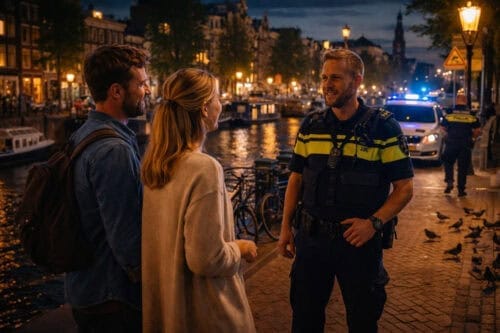
In most parts of the city, walking around in the evening feels relaxed. Some areas, like the Red Light District, can feel more intense — not necessarily unsafe, but different in atmosphere.
🚕 Getting around late is simple
Trams, taxis and apps like Uber or Bolt make it easy to return to your accommodation without much effort, which adds to the overall sense of ease.
🌿 Safety in Amsterdam is less about avoiding the city, and more about understanding how it works. With a bit of awareness, most visitors find it easy to move around comfortably.
✨ Final Thoughts
Many visitors arrive in Amsterdam with a clear image in mind — canals, bicycles and historic streets. But what often stays with them are the things they didn’t expect.
🌿 Like the hidden gardens behind canal houses, which you don’t see from the street. Or the way the city suddenly opens up into green parks, sometimes just a few minutes away from the busiest areas.
🚤 Or the canals themselves — not just as scenery, but as part of everyday life, with boats, houseboats and constant movement on the water.
📍 These are not always the things people plan for. They are the details you notice once you’re there — and often the ones that make the city feel different from what you expected.
💬 What surprised you most about Amsterdam?