


Ibiza: Truth or Myth — 30 Things Travellers Often Get Wrong
Is Ibiza only for party people? Is it always expensive? Is it too crowded, too loud and not really worth it unless you love nightlife? People say these things about Ibiza all the time. Some of them are true. Some are outdated. And some fall apart the moment you look beyond the obvious version of the island.
 This guide is for travellers who do not know Ibiza well yet and want a clearer picture before they go. It covers prices, safety, transport, quiet places, culture, history and some of the island’s best-known legends.
So how much of what people say about Ibiza is actually true? Let’s take a closer look.
Want to jump straight to a section?
Money & Prices
Who Ibiza Is Really For
Getting Around & Staying Safe
Culture, History & Quiet Ibiza
Legends, Spiritual Stories & Island Myths
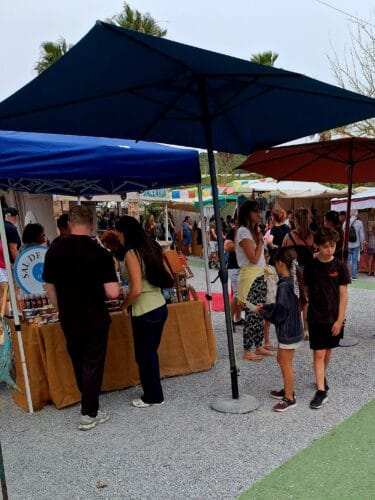 🛍️ Are Ibiza’s hippy markets cheap souvenir spots?
🎧 Is Ibiza only for party people?
❌ Myth.
The trick is choosing the right Ibiza. If you stay close to the main nightlife zones in high summer, you will meet the famous version. But the island is much more layered.
💡 Travelglaze tip: Choose your base carefully. Ibiza Town gives you culture, restaurants and Dalt Vila nearby. Santa Eulària feels calmer and more polished. Sant Antoni can be practical and cheaper, but check the exact area if you want quiet evenings.
🌿 Is Ibiza a good island for calm travellers?
✅ True.
Ibiza can work very well for calm travellers, but not if you expect silence everywhere. The island is small, popular and busy in the main season. Still, there are many softer ways to experience it: slow mornings in villages, short cultural stops, coastal viewpoints, early market visits and simple walks before the heat builds.
This is where Ibiza becomes more interesting. You do not have to “do” the island loudly. You can use it as a compact island for easy exploring, with enough variety to keep each day different.
 🏛️ Is Ibiza interesting if you do not care about beaches?
✅ True.
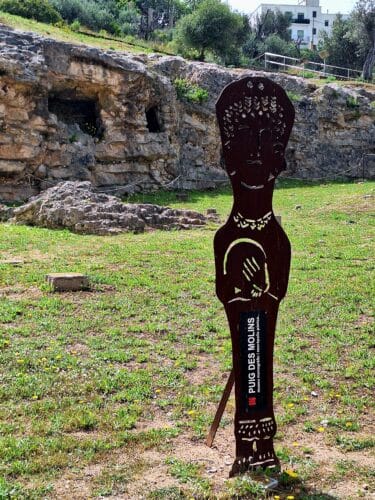
Ibiza works surprisingly well without a beach plan. Dalt Vila gives you the old, fortified side of Ibiza Town, with walls, gates and views over the harbour. Sa Caleta shows a much older layer: the remains of a Phoenician settlement near the coast. Puig des Molins is about burial history, not beach life, and gives the island a more serious cultural side. And there is a lot more to see.
💡 Travelglaze tip: Check opening days before you build your day around museums, caves or markets. Some places are seasonal, some have limited hours, and a “non-beach day” works best when you know what is actually open.
🏰 Is Dalt Vila one of Ibiza’s most important historic places?
✅ True.
Dalt Vila is beautiful, but it is not just a place for white walls and harbour photos. It is the old fortified upper town of Ibiza, built for defence, with heavy gates, high walls and steep stone streets.
That changes how you see it. You are not only walking through a charming old town. You are walking through a place that had to protect itself from attacks from the sea.
💡 Travelglaze tip: Wear proper shoes here. Dalt Vila is not a flat postcard walk. The streets can be steep, uneven and slippery in sandals.
🏺 Did Ibiza’s story start with the hippies?
❌ Myth.
The hippy image is famous, but Ibiza’s history is much older. Long before the markets, beach bars and bohemian style, Ibiza was part of Phoenician and Punic trade routes in the Mediterranean.
You can still see that older layer at places such as Sa Caleta and Puig des Molins. Sa Caleta shows remains of an early settlement. Puig des Molins tells a different story: burial history, rituals and the island’s ancient connections.
✨ Fun fact: One of the underground tombs at Puig des Molins is known as the Hypogea of the Mule. It was discovered by accident in 1946, when a mule fell into the tomb. Not exactly a gentle museum opening — but a very Ibiza way to stumble into ancient history.
🧂 Is salt one of Ibiza’s real heritage stories?
✅ True.
Ses Salines is one of the easiest places to see Ibiza’s salt story. You can spot the salt flats in the south of the island, near the airport, Ses Salines beach and Es Cavallet. Depending on the season and light, the shallow basins can look white, silver, pinkish or almost mirror-like.
The salt is made in a simple but slow way: seawater moves through shallow ponds, the sun and wind evaporate the water, and salt crystals are left behind. The finer fleur de sel is collected more carefully from the surface and is often used as a finishing salt, not as basic cooking salt. That is why you may see Ibiza salt sold as a local gourmet product in shops.
💡 Travelglaze tip: This is a good “small stop” rather than a full-day sight. Combine Ses Salines with a short beach walk, Es Cavallet, or a stop near the salt ponds. Go for the landscape, the light and the idea that Ibiza once made serious money from something as simple as seawater.
 👗 Is Ibiza’s white boho style a real island story?
✅ True.
The white dresses, cotton, lace and relaxed boho look are not just random holiday fashion. Ibiza has its own style called Adlib fashion, linked to the idea of dressing freely, but with taste.
It grew strongly in the 1970s, when hippy influence mixed with older Ibizan clothing styles. That is why the look feels both simple and dressed-up: white fabrics, embroidery, loose shapes and handmade details.
💡 Travelglaze tip: If you like the style, look beyond cheap beach-shop versions. In Ibiza Town, Santa Eulària and some markets, you can find better-made pieces with local design roots. They cost more, but they make more sense as an Ibiza souvenir than another fridge magnet.
💃 Is Ball Pagès just a cute folk dance?
❌ Myth.
Ball Pagès is Ibiza’s traditional dance, and it is much more serious than it first looks. The woman moves slowly and formally, while the man dances around her with big jumps and large castanets.
It is often described as a courtship dance. That makes it interesting: the dance is not only about music, but also about old village life, roles, clothing and showing yourself in public.
✨ Fun fact: In traditional Ibizan dress, the details could say a lot. One story says that the ribbons hanging from a single woman’s hat showed how many suitors she had. For more everyday island history, visit the Ethnographic Museum of Ibiza in Santa Eulària, where you can see traditional clothing, tools, jewellery and objects from rural Ibizan life.
🧚 Are the fameliars one of Ibiza’s strangest old stories?
✅ True — as folklore.
The fameliars are small magical creatures from Ibizan folklore. The story says they come from a special herb that appears on the night of Sant Joan, near the old bridge of Santa Eulària.
They are not sweet little fairy-tale helpers. In the legend, a fameliar wants only two things: work or food. If you give it a job, it works fast. If you do not, it starts eating. That makes the story funny, but also a little dark.
✨ Fun fact: You can find little statues of the fameliars in Santa Eulària.
🕯️ Is Tanit just a modern Ibiza wellness symbol?
❌ Myth.
Tanit was an important goddess in the Punic world and was worshipped on Ibiza long before the island became famous for hippies, clubs or retreats. Now she is used a lot in modern Ibiza imagery.
The strongest Ibiza link is Cova des Culleram, a cave sanctuary in the north of the island. This was not a decorative “spiritual spot.” It was a real ancient religious place connected to offerings and worship.
💡 Travelglaze tip: If you visit Cova des Culleram, treat it as heritage, not as a ritual playground. Go for the history, the setting and the quiet atmosphere — not to leave candles, objects or “offerings” behind.
🪨 Is Es Vedrà really one of the most magnetic places on Earth?
❌ Myth.
Es Vedrà is one of Ibiza’s most dramatic sights, but the famous “magnetic energy” claim is not proven. The rock has collected many stories: sirens, Atlantis, Tanit, UFOs and strange island energy.
That makes Es Vedrà a perfect example of how Ibiza works: a real landscape becomes stronger because people keep adding stories to it.
💡 Travelglaze tip: Go for the view, not for a promise of magic. Es Vedrà is impressive enough without needing the “third most magnetic place on Earth” story to be true.
 🌀 Is Ibiza’s Stonehenge an ancient sacred site?
❌ Myth.
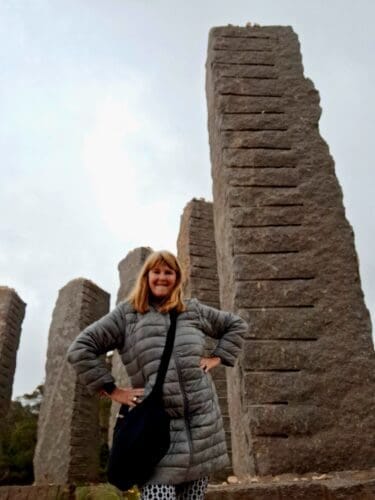
The place often called Ibiza’s Stonehenge is not ancient. Its real name is Time and Space – The Speed of Light, a modern land-art installation by Andrew Rogers from 2014.
It still feels strange and powerful because of the setting: stone columns, open sky, sea views and the nearby line of Es Vedrà. But it is not archaeology. It is modern art with a mythical mood.
💡 Travelglaze tip: Go with the right expectation. Time and Space is free, open and atmospheric, but there are no facilities, no museum explanation and usually little shade. Bring water, wear decent shoes and do not expect an ancient monument.
🏴☠️ Are Ibiza’s pirate stories just tourist drama?
❌ Myth.
Ibiza’s pirate stories sound dramatic, but they are not just holiday theatre. For centuries, coastal attacks were a real fear on the island. That is why Ibiza has old watchtowers along the coast.
✨ Fun fact: Some of Ibiza’s most scenic viewpoints were once warning points. So when you stand near a tower such as Torre des Savinar, you are not only looking at the sea. You are standing in a place where people once watched for ships they did not want to see.
