


London’s landmarks are so famous that they almost feel familiar before you see them. But behind the postcard views are plenty of half-truths, name mix-ups and stories that are more surprising than the buildings themselves.
Was the old London Bridge really sold to America?
✅ True! The old London Bridge was sold, taken apart, shipped to the United States and rebuilt in Lake Havasu City, Arizona, a planned town in the Arizona desert. The bridge was shipped across the Atlantic, each stone carefully numbered, and rebuilt over a specially dug channel. It opened in 1971 and remains Arizona’s second most visited attraction today.
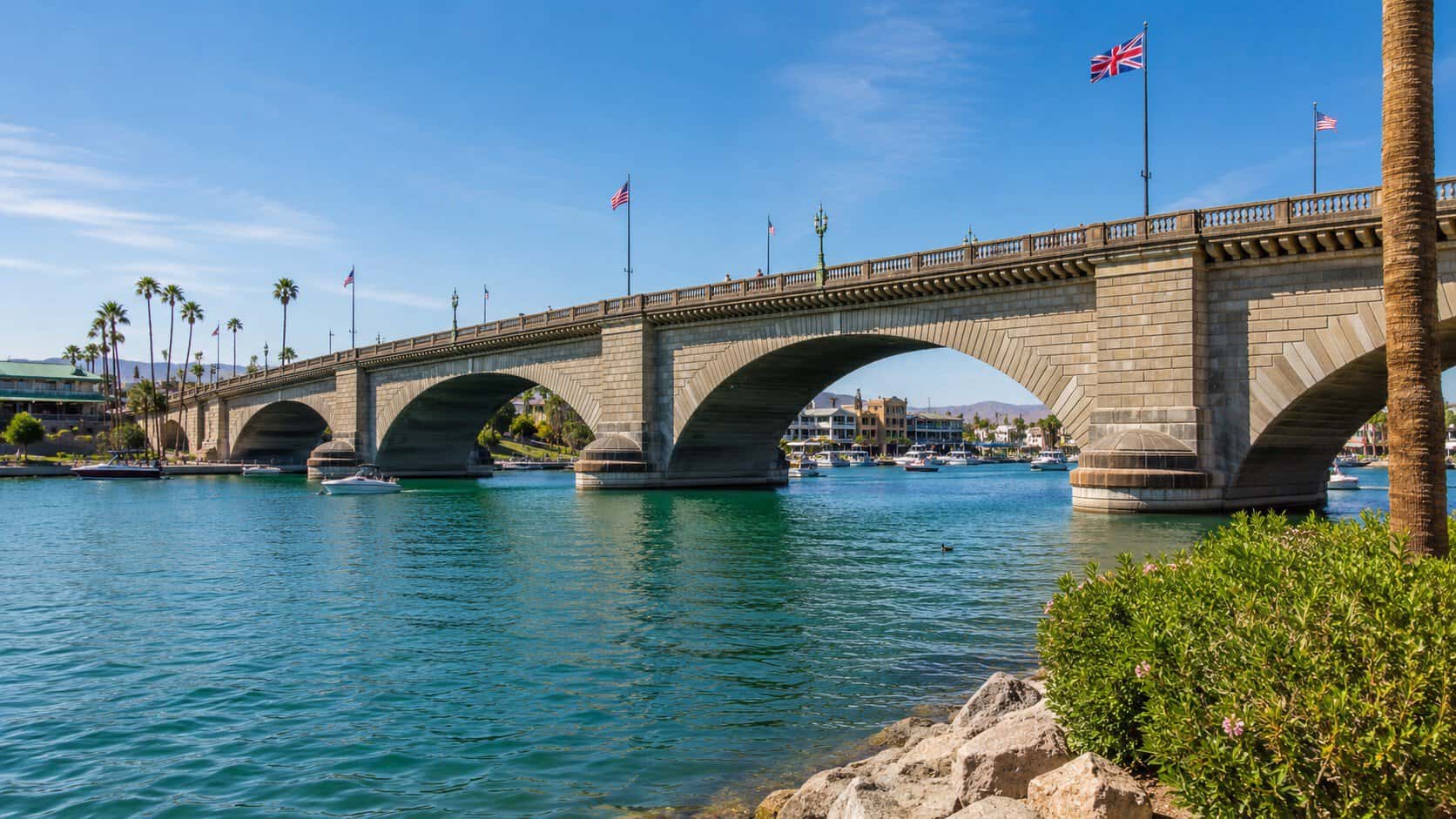
Why? The old bridge was sinking slightly and needed replacing. Rather than demolish it, the City of London decided to sell it. McCulloch paid £1.2 million for it. The new London Bridge you see today (opened in 1973) is much less ornate but far more practical.
 Fun fact: Many people believe the buyer thought he was buying Tower Bridge, but that story is usually treated as a myth.
Is Westminster Abbey a cathedral?
❌Myth — it looks like one, but it has a different, rarer status.
Westminster Abbey is not a cathedral. It’s a “Royal Peculiar,” meaning it belongs directly to the monarch rather than to any diocese or bishop. This gives it a unique independence within the Church of England.
Since 1066, every British coronation has taken place here, and the Abbey is also the burial site of monarchs, poets, and scientists. Despite its cathedral-like scale, it answers to the Crown—not to Canterbury or York.
Fun fact: Seventeen royal weddings have been held at the Abbey, including Prince William and Kate Middleton’s in 2011. If you visit, look for the oldest door in Britain—an oak door from the 1050s, still in use.
Is Big Ben actually the clock tower?
❌ Myth. Big Ben is not the tower. Big Ben is the name of the Great Bell inside the tower—the one that chimes on the hour. The tower itself is called Elizabeth Tower (renamed in 2012 for the Queen’s Platinum Jubilee; before that it was “The Clock Tower”).
Most people say “Big Ben” when they mean the whole thing, so the myth is completely understandable. But technically, you’re looking at Elizabeth Tower, and inside it chimes Big Ben.
Big Ben and Westminster are also easy to include in a budget-friendly London walk. For more ideas, read my guide to free and almost free things to do in London
Is the Gherkin the tallest building in London?
❌ Myth — The Gherkin (officially 30 St Mary Axe) is one of the most recognizable buildings in London’s financial district because of its pickle-like shape. However, it is far from the tallest.
What makes the Gherkin famous isn’t height—it’s shape. That curved, bulging silhouette stands out in London’s skyline precisely because it’s different. It’s become an architectural icon not for reaching the sky, but for looking like something you’d find at a farmer’s market.
💡 Travelglaze Tip: The Gherkin is best photographed from street level in the surrounding streets of the City. The angle makes it look even more dramatic than it actually is.
Are the lions at Nelson’s Column made from melted cannons?
✅ True — In the center of Trafalgar Square stands a tall monument to Admiral Nelson, who died during the Battle of Trafalgar in 1805. The four huge bronze lions at the foot of the column were designed by artist Edwin Landseer and added later, in 1867. They were cast using the bronze from cannons captured from the French and Spanish fleets.
Fun fact: Landseer had never sculpted a lion before, and the project took longer than expected—partly because he insisted on working from a real dead lion that kept decomposing in his studio. If you look closely at the paws, you’ll see that the results are not quite accurate though.
St. Paul’s Cathedral: Is it the highest church in London?
✅ True—but with a catch. St. Paul’s Cathedral held the title of London’s highest building (at 111 meters including its famous dome) until the 1960s, when taller buildings began to rise around it.
So technically: Yes, it was the highest church. Now? It’s still the most iconic church, and the dome is still one of London’s most recognizable silhouettes—but it’s been overtaken by modern skyscrapers.
The dome was designed by Sir Christopher Wren after the Great Fire of 1666 destroyed the previous medieval cathedral. It’s an engineering marvel for its time, and the view from the Whispering Gallery inside is still one of London’s best-kept secrets.
💡 Travelglaze Tip: Climbing to the Whispering Gallery (257 steps) is tiring but worth it. Go early in the morning or late afternoon when crowds thin out. And yes, the “whispering” effect actually works—whisper on one side of the gallery’s curved wall, and someone on the opposite side can hear you clearly.
London is perhaps the only city in the world where centuries-old superstitions are still treated as official government business. From the ravens in the Tower to the rules of the palace, royalty is woven into the very fabric of the city.
Is the King at home if the Union Jack is flying over Buckingham Palace?
 Myth — Many people think the Union Jack (the national flag) means the King is in. It’s actually the opposite. When the King is in residence, the Royal Standard (a yellow, red, and blue flag) flies. If you see the Union Jack, he is likely at Windsor, Sandringham, or elsewhere.
Fun fact: The Royal Standard is never flown at half-mast, because the monarchy is considered to continue immediately from one monarch to the next. Even after the death of a monarch, the Royal Standard does not traditionally “mourn” in the same way as other flags.
Do the Yeomen Warders (Beefeaters) really wear Tudor uniforms?
 True—mostly. The iconic red and gold uniforms worn by the Tower of London’s Yeomen Warders are based on Tudor-era designs, though they’ve been refined over time. The uniform dates back to 1485.

They’re called “Beefeaters,” and there are several theories about the nickname—some say it comes from their historical rations of beef, others claim it’s from the French “buffetier” (an officer of the guards). No one’s entirely sure, but the name stuck.
The uniforms are real, the history is real, and yes, they actually wear them every day. It’s one of the few places in the world where a 500-year-old dress code is still strictly observed.
Fun Fact: Beefeaters are former military personnel, and they take their role seriously. They’re not just costume performers—they’re trained security with real authority.
Does the Changing of the Guard happen every day?
Myth! Many visitors think the Changing of the Guard happens every day at Buckingham Palace, but the schedule changes.
Buckingham Palace is the official London residence of the monarch. The Changing of the Guard is the ceremony where the old guard hands over duty to the new guard, often with music, marching and plenty of cameras pointed at the palace gates.
It is one of the most famous free sights in London, but it does not happen every single day. The schedule depends on the season, weather, security and official events. In summer, it is usually more frequent. In winter, it may happen fewer times per week.
So if this is something you really want to see, do not simply turn up and hope.
 Travelglaze tip: Always check the official schedule before you go. Arrive early if you want a decent view, but expect crowds around Buckingham Palace and The Mall. For a slightly more comfortable experience, you can also watch parts of the ceremony from nearby St James’s Palace or along the route.
Will the Kingdom fall if the ravens ever leave the Tower of London?
True-ish. The legend says if the ravens leave, the kingdom falls. So they stay.
At least six ravens are kept at the Tower of London at all times, cared for by a dedicated Ravenmaster—a real position held by one of the Yeoman Warders. The birds have their wings lightly clipped, not to prevent flight entirely, but to stop them straying too far from the Tower grounds.
The superstition dates back to Charles II in the 17th century. When his astronomer complained that ravens were interfering with his telescope in the Tower, Charles ordered them removed—until someone warned him of the ancient prophecy. He promptly changed his mind, and ravens have been kept there ever since.
Fun fact: The ravens are treated like royalty themselves. They eat fresh meat, biscuits soaked in blood, and the occasional hard-boiled egg. During World War II, when only one raven survived the Blitz, Winston Churchill personally ordered reinforcements.
Is the Ceremony of the Keys at the Tower of London the oldest military ritual in the world?
True—it’s been performed every night for over 700 years.
Every single night, without fail, the Tower of London is locked by a Yeoman Warder as part of the Ceremony of the Keys. The ritual begins at exactly 9:53 PM and follows a precise script between the Chief Yeoman Warder and the military escort.
The ceremony has been interrupted only a handful of times—most notably during World War II when a bomb knocked over the guard, and once when a tourist grabbed a Yeoman Warder’s coat in panic. In both cases, a formal apology was written to the King.
Travelglaze tip: Tickets to watch the ceremony are free but usually book out months in advance. It’s one of London’s least-known experiences and one of the most atmospheric.
Are the Crown Jewels really cursed?
❌ Myth — While it makes for a fantastic ghost story, there is no evidence that the Crown Jewels carry a collective curse. However, because these gems have been at the center of wars, thefts, and power struggles for centuries, they have picked up some legendary “bad luck” stories along the way.
The most famous example is the Koh-i-Noor diamond. This massive stone has a long history of being passed from one conquered ruler to another. Legend says it brings misfortune to any man who wears it, which is why in the British Royal Family, it has only ever been worn by women.
💡 Travelglaze Tip: When you visit the Tower of London to see the Crown Jewels (they’re stunning), pay attention to the individual stories of each piece. The drama is real; the curse is just how people have chosen to tell those stories. It makes the experience far more interesting than just looking at pretty gems.
London’s transport system is part of the city’s identity: the Tube signs, red buses, black cabs and those endless station names. But even here, some of the best-known “facts” are not quite what they seem.
If you want the practical side of the Tube, Oyster, contactless payment and London buses, read my guide to how to get around London
🚇 Is the London Underground the oldest metro system in the world?
✅ True! The London Underground is the oldest underground railway system in the world.
The first section opened in 1863 between Paddington and Farringdon. Today, that route is part of the wider Tube and rail network, but at the time it was a huge engineering experiment. London was growing fast, the streets were crowded, and the city needed a new way to move people around.
Early Underground trains were very different from the electric Tube trains we know now. They were steam-powered, which meant smoke, heat and a very different travel experience from today’s cleaner trains.
🧡 Fun fact: The nickname “the Tube” comes from the deep-level circular tunnels used on several lines. But not every Underground line runs in a tube-shaped tunnel — some are much closer to the surface.
Is there really a ghost station on the Tube?
✅ True — and more than one.
London has around 40 disused or “ghost” stations, some visible from passing trains, others buried and forgotten. The most famous is Aldwych, closed in 1994, which now serves as a film set and occasional Time Out attraction.
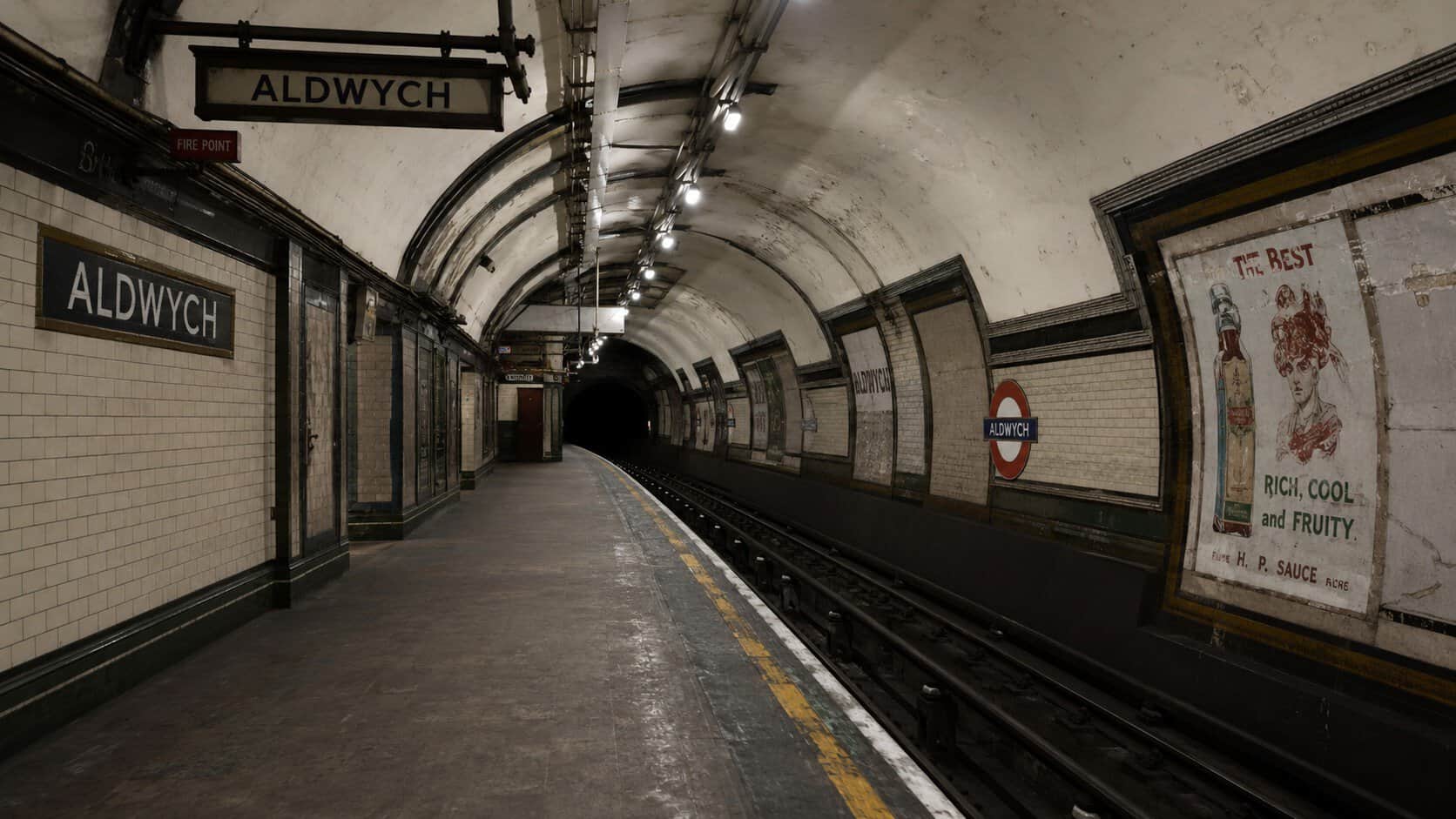
Down Street station, between Hyde Park Corner and Green Park, has an even stranger past. During World War II, it was converted into an underground bunker for Winston Churchill and his War Cabinet. Churchill called it “The Barn,” and it even had a telephone exchange, sleeping quarters, and a dining room complete with silver service.
🧡 Fun fact: You can sometimes spot the platforms of Down Street through the right-hand window on the Piccadilly Line between stations—the tiles still visible in the darkness.
Do you really have to “mind the gap” on the London Underground?
✅ True—mostly. The gap between the platform and the train is real, and it varies depending on which station and which line you’re on. Some gaps are tiny (less than an inch), while others can be several inches wide.
The famous announcement “Mind the gap” was introduced at Embankment Station in the 1960s because that platform had a particularly large gap. It became so iconic that it’s now used throughout the world.
💡 Travelglaze Tip: Hold the handrails when the train is moving, especially if you’re standing. London Tube trains accelerate and brake fairly aggressively, and you don’t want to stumble. It’s not dramatic, but it’s worth remembering if you’re tired from sightseeing.
Do Londoners really complain about the Tube being too hot?
✅ True. The London Underground is notoriously hot, especially in summer. In July and August, temperatures in the tunnels can reach 30°C (86°F) or higher—sometimes even hotter than the surface.
The problem is old infrastructure. The Tube was built in the 1860s, and large parts of it still use Victorian-era systems. Modern cooling technology exists, but retrofitting the entire network would be enormously expensive and disruptive.
TfL (Transport for London) has been working on improvements, but progress is slow. During heat waves, commuters suffer. Some lines actually have to reduce service because tracks are warping in the heat.
💡 Travelglaze Tip: If you’re visiting in summer, travel early in the morning or later in the evening to avoid peak heat. During midday, the Tube is packed and uncomfortably warm. Also, bring a water bottle—you’ll need it. The stations have water fountains, but they’re not always easy to find.
Do London black cab drivers really have to learn thousands of streets?
✅ True! Licensed London black cab drivers have to pass a very difficult test called The Knowledge.
The Knowledge requires drivers to learn thousands of streets, landmarks, routes, squares, hotels, hospitals, theatres and important buildings across London. It can take several years to complete. Drivers often study by riding around the city on scooters, memorising routes street by street.
This is why black cab drivers are famous for knowing London without relying only on GPS. In a city with one-way streets, old lanes, traffic restrictions and confusing shortcuts, that knowledge still matters.
💡 Fun fact: Because of this intense training, scientists have discovered that London taxi drivers actually have a larger hippocampus (the part of the brain used for navigation) than the average person!
Beneath the pavement and between the landmarks, another London flows. Rivers run hidden, tunnels twist under government buildings, and some of the city’s most extraordinary spaces were never meant to be found.
Does a lost river really flow beneath Buckingham Palace?
✅ True — the River Tyburn runs right under the palace gardens.
Before London swallowed it, the Tyburn was a respectable stream flowing from Hampstead down through Marylebone, across what is now Buckingham Palace’s grounds, and into the Thames near Vauxhall. By the 18th century, it was increasingly polluted and eventually buried underground as part of London’s sewer system.
Today the Tyburn still runs through a pipe beneath the palace, under the courtyard of the Royal Academy, and past Baker Street. You can’t see it—but you can trace its path by following a series of blue plaques and listening for the faint sound of running water near certain manholes.
🧡 Fun fact: London has at least 20 lost rivers, including the Fleet, the Westbourne, and the Effra. The Westbourne still runs through a pipe above the platform at Sloane Square station—look up and you’ll see it.
Can you walk through a tunnel under the Thames that was never meant for the public?
✅ True — the Greenwich Foot Tunnel takes you under the river through Victorian engineering.
Built in 1902, the Greenwich Foot Tunnel was designed to let dock workers living south of the river walk to work in the Isle of Dogs without relying on unreliable ferries. It’s over 370 metres long, lined with white glazed tiles, and accessible only by spiral staircase or lift.
Today it’s open to everyone, and it’s one of the most atmospheric walks in London. Midway through, you’re standing directly under the Thames, the sound of your footsteps echoing off the tiles, with only the occasional cyclist breaking the silence.
🧡 Fun fact: There’s a twin tunnel further east at Woolwich, opened in 1912. Both were built because the Victorians didn’t want working-class pedestrians mixing with the grand new Tower Bridge traffic. Class division shaped London’s underground more than most people realise.
Is there a Roman temple hidden beneath a modern London office building?
✅ True — and you can visit it in the basement of a Bloomberg office.
Deep beneath the Bloomberg European headquarters on Queen Victoria Street lies the Roman Temple of Mithras, an underground sanctuary built by Roman soldiers around AD 240. Dedicated to a mysterious Eastern god, the temple was once filled with torchlight, chanting, and ritual feasting.

The temple was discovered by chance during post-war construction in 1954, causing a sensation. After years of being displayed on a car park roof (not exactly prestigious), it was returned to its original location and opened to the public in 2017. The experience now includes light shows and atmospheric soundscapes that recreate the original mystery cult rituals.
🧡 Fun fact: The temple was built near the now-lost River Walbrook. The archaeologists also found marble statues, pottery, and even a silver box still sealed after 1,700 years. Entry is free, and it’s one of the best-hidden experiences in the City.
Does Downing Street have a secret tunnel connecting to Buckingham Palace?
🤷 Possibly true — but officially, the government won’t confirm or deny.
Rumours of a tunnel linking No. 10 Downing Street to Buckingham Palace have circulated for decades. The most persistent version says it was built during World War II as an escape route, connecting via the underground Cabinet War Rooms to various government buildings.
While some Whitehall tunnels definitely exist—the Q-Whitehall tunnel network is well-documented—a direct line to the palace remains unconfirmed. During Margaret Thatcher’s era, a maintenance worker claimed to have seen an iron door labelled “to the palace,” but no official source has ever verified the full route.
🧡 Fun fact: What is confirmed is the existence of a tunnel from Westminster to the old MI6 building, and another from the Palace of Westminster to the Cabinet Office. London’s government runs on secrets as much as on legislation.
Is there a secret mail tunnel running under London?
✅ True — the Mail Rail, and you can now ride it yourself.
From 1927 to 2003, a network of driverless electric trains ran 21 metres beneath London’s streets, shuttling mail between sorting offices from Whitechapel to Paddington. At its peak, it carried 4 million letters a day, bypassing the congested streets above.
The tunnels closed when new sorting technology made them uneconomical. But in 2017, the Postal Museum reopened a section as a visitor attraction. You can now climb aboard a tiny train and ride through the narrow tunnels, exactly as the post once did.
🧡 Fun fact: During World War I, the tunnels were used to warehouse priceless artworks from the National Portrait Gallery, keeping them safe from Zeppelin raids.
Can you visit a secret wartime bunker under Westminster?
✅ True! You can visit the Churchill War Rooms, an underground command centre used during World War II.
The Churchill War Rooms are beneath Westminster, close to the Houses of Parliament, Westminster Abbey and St James’s Park. From the outside, this is one of London’s busiest sightseeing areas. Below ground, you step into the rooms where Winston Churchill and his government worked during the war.
The site includes map rooms, offices, sleeping areas and communication spaces. Some rooms were left almost exactly as they were when the war ended in 1945. It gives a very different view of London: not royal, not decorative, but tense, practical and deeply historic.
This is not a myth in the dramatic movie sense. The rooms were real, and they played an important role in Britain’s wartime government.
🧡 Fun fact: The Map Room was left so carefully preserved that it still feels as if someone has just stepped away from their desk.
To truly “travelglaze” London, you have to understand the rhythm of the city. It’s a place where people apologize for bumping into you, where the pub is the second living room, and where the weather is a permanent topic of conversation.
Was fish and chips invented in London?
✅ True-ish — but disputed! London has one of the strongest claims, but the full origin story is not completely settled.

Fish and chips became popular in Britain in the 19th century, especially as an affordable meal for working people. Fried fish is often connected with Jewish immigrant communities in London, while chips became popular in other parts of the country too. The classic combination of fried fish with chips likely developed through several influences rather than one neat invention moment.
One famous claim points to Joseph Malin, who is often said to have opened one of the first fish and chip shops in East London in the 1860s. East London, historically a working-class and immigrant area, played an important role in the story.
So can London claim fish and chips? Partly, yes. But other places in England also claim a role, especially in the north.
🧡 Fun fact: Fish and chips became so important to everyday life that during both World Wars, the British government tried hard not to ration them in the same way as many other foods.
Do pelicans really live in St James’s Park?
✅ True! Pelicans really do live in St James’s Park.
St James’s Park is one of London’s royal parks, located between Buckingham Palace, The Mall and Westminster. Many visitors walk through it on the way between the palace and the Houses of Parliament, but not everyone expects to see pelicans there.
Pelicans have lived in the park since the 17th century, when they were given as a gift from the Russian ambassador to King Charles II. The tradition has continued, and pelicans are still part of the park today.
They are usually found around the lake, where they often attract curious visitors. They look almost too exotic for central London, which makes them one of the city’s nicest small surprises.
🧡 Fun fact: The pelicans are fed daily by park staff, usually in the afternoon. If you time it well, you may see them being fed near Duck Island Cottage.
Does “Cockney” mean being born within the sound of Bow Bells?
✅ True as a tradition! The classic definition of a Cockney is someone born within the sound of Bow Bells.
Cockney is connected with a working-class London identity, especially in the East End, and with Cockney rhyming slang. This is a playful way of speaking where a phrase rhymes with the intended word. For example, “apples and pears” means stairs.
Modern London has changed a lot. Traffic noise, migration, rising housing prices and changing communities mean the old definition is more cultural than practical now.
🧡 Fun fact: The sound of Bow Bells once travelled much farther than it does today. Modern noise has made the old “within earshot” idea harder to measure.
Is there really a pub in London that has been open for over 500 years?
✅ True — several claim the title, but one has the receipts.
The Olde Wine Shades on Martin Lane, near Monument, was built in 1663 and still serves wine in the same oak-panelled room that survived the Great Fire. But for true longevity, look to The Seven Stars in Holborn, established in 1602, or The Cheshire Cheese on Fleet Street, rebuilt in 1667 after the fire.
The oldest contender is Ye Olde Mitre in Holborn, tucked down a tiny alley and dating back to 1546. It was technically part of Cambridgeshire until the 20th century.
🧡 Fun fact: Ye Olde Mitre still has a preserved cherry tree trunk embedded in the wall, said to mark the spot where Queen Elizabeth I danced around a tree with Sir Christopher Hatton. Whether she actually did is another story entirely.
Do Londoners really talk about the weather that much?
✅ True — and there’s a deeper reason behind it.
Londoners do discuss the weather constantly, but not because it’s dramatic—because it’s safe. The weather is the universal conversation opener, the neutral ground between strangers in a city where privacy is valued and directness can feel intrusive.
London’s weather is genuinely changeable, which helps. A single day can bring sun, drizzle, cloud, and a sudden downpour. But the real function is social: talking about the weather is how Londoners test whether you’re open to conversation without committing either party to anything.
🧡 Fun fact: The classic “Nice day, isn’t it?” followed by “Yes, but they say it’ll rain later” is a choreographed dance. If the other person expands on the topic, conversation may continue. If they just nod, you move on—no feelings hurt.
Is afternoon tea an ancient British tradition?
❌ Myth — it was invented by one hungry duchess in the 1840s.
Anna Russell, the 7th Duchess of Bedford, is credited with inventing afternoon tea. In the gap between lunch and a fashionably late dinner at 8 PM, she grew so hungry that she began ordering tea, bread, and small cakes to her private room in the mid-afternoon.
She started inviting friends, and the ritual caught on among the upper classes before spreading across society. By the 1880s, afternoon tea was a full social event with its own etiquette, menus, and architecture (tea rooms boomed, as did tea dances in the Edwardian era).
🧡 Fun fact: High tea is actually a working-class tradition—a substantial meal eaten at the end of the working day with tea, bread, meat, and pickles. The “high” refers to the high dining table, not the social class. What most tourists experience as afternoon tea is the posh version, not the practical one.
