


✨ Cultural Istanbul: Dance, Crafts & Evening Magic 🎭🪔🍦
When the sun sets over the Bosporus, Istanbul changes character. The crowds thin, the lights come on, and the city reveals a softer side: music, rituals, and crafts that connect daily life to centuries of tradition. Here, culture isn’t something you just look at in a museum — it’s something you feel in movement, sound, and colour.
Save this on pinterest!
From dancers who whirl in devotion, to artisans shaping clay or glass, to playful ice-cream sellers teasing their customers, the evenings are when Istanbul becomes most alive.
Here’s how Istanbul’s culture revealed itself to me:
Few experiences in Istanbul feel as timeless as watching the whirling dervishes. Their ceremony, called Sema, is not a performance but an act of worship, a spiritual ritual of the Mevlevi Order dating back to the 13th century. Dancers in tall felt hats and flowing white robes spin slowly, accompanied by haunting flute music and chanting. For the dervishes, the spinning represents a journey of the soul: leaving the ego behind and moving closer to the divine.
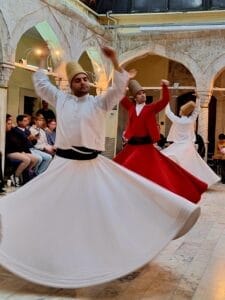
What makes it so powerful is the silence in the room. Even in a hall filled with visitors, the atmosphere shifts once the music begins. You’re not watching a “show” in the tourist sense — you’re witnessing a sacred practice that has been repeated for centuries. It’s meditative, almost hypnotic, and it lingers with you long after the last spin stops.
📍 Address: Hodjapasha Cultural Center, Hocapaşa Mah., Ankara Cd. No:3, Sirkeci/İstanbul
Why go: To witness a UNESCO-recognized ritual that blends music, movement, and mysticism into one unforgettable experience.
Visit time: Around 1 hour. Most shows begin around 19:00.
Travelglaze tip: Arrive early, not just for your seat but to let yourself settle. The quiet before the ritual makes the moment even more moving.
Note: Photography is usually restricted. Respect the rules to avoid disrupting the ceremony.
If the whirling dervishes are about stillness and devotion, belly dance (oryantal dansı) is about energy and rhythm. With its roots in Ottoman-era celebrations, it has grown into one of Turkey’s most recognizable performance styles. Sparkling costumes, quick drumbeats, and graceful hip movements make it captivating to watch.
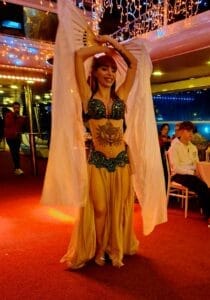
Alongside belly dance, you’ll also find traditional folk dances performed in cultural shows. From the Black Sea’s fast-paced horon to the powerful zeybek from western Turkey, each dance tells a story of its region — bravery, joy, or harvest celebrations. Many restaurants and Bosporus dinner cruises include these performances in their evening programs, blending food, music, and movement into one night.
📍 Where: Turkish Night Shows across Istanbul; common in venues in Sultanahmet, Beyoğlu, and on Bosporus cruises.
Why go: To see how music and dance have long been part of Turkish celebrations — from Ottoman courts to village squares.
Visit time: Usually 1–2 hours, often combined with dinner or a cruise.
Travelglaze tip: Choose carefully — some shows feel too staged. Look for smaller venues or quality cruises where the focus is on culture, not just on filling tables.
Note: Performances vary widely. Some cruises offer a mix of belly dance, folk dance, and live music; others focus more on spectacle. Prices range from €30–€70 depending on food and setting.
🪔 Mosaic Lamps
Colourful mosaic lamps are everywhere in Istanbul — glowing in shop windows, piled high in bazaars, hanging in cafés. Each lamp is handmade with hundreds of tiny glass pieces. Light one up and your living room suddenly looks like a corner of the Grand Bazaar.
💡 Fun fact: Some shops keep the lights low on purpose so the lamps look even more magical — a trick that works, because many visitors find it impossible to leave without one.
📍 Where: Grand Bazaar, Sultanahmet side streets.
Why go: To step into a shop that feels more like Aladdin’s cave.
Visit time: 15–30 minutes browsing; 1–2 hours for a workshop.
Travelglaze tip: Try a mosaic workshop — pricier than buying a lamp, but you’ll remember every piece you placed.
Note: Bargaining is expected in bazaars, but not in fixed-price workshops.
🏺 Ceramics & Pottery
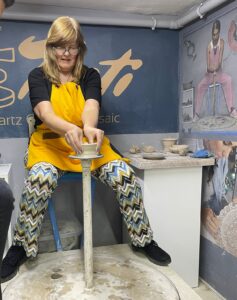
Istanbul’s ceramics trace back to Iznik tiles — those deep blues and whites decorating mosques and palaces. Today, workshops invite you to paint your own tile or bowl. It’s quiet, calming, and your hands will leave more colourful than when you started.
💡 Fun fact: The tulip motif, now strongly linked to the Netherlands, first appeared in Ottoman ceramics and became a symbol of wealth during the “Tulip Era” of the early 1700s.
📍 Where: Small art studios near Çemberlitaş and Sultanahmet.
Why go: To see how Ottoman history turns into something you can hold.
Visit time: 1–2 hours for a workshop.
Travelglaze tip: Go for a small studio — the tea is hot, the stories flow, and the artist may let you peek into their sketchbook.
Note: ⚠️ Some workshops are seasonal or by appointment. Check availability before you go.
🧵 Carpets & Calligraphy
Carpets in Istanbul aren’t just floor coverings — they’re family heirlooms woven with patterns that tell a story. Step into a carpet shop and you’ll likely be offered tea while the owner unfurls one dazzling rug after another. Whether you buy or not, the show itself is worth it.
💡 Fun fact: In the Grand Bazaar, carpet sellers are masters at folding rugs into impossibly small bundles. They’ll happily prove that even a full-size rug can shrink down to fit in an airplane overhead bin — a sales trick perfected over decades.
Calligraphy is another art form still alive in Istanbul. Skilled artists use reed pens to draw elegant Arabic and Ottoman Turkish scripts, sometimes combined with ebru (marbled paper). Watching the swirling patterns form on water before being transferred to paper feels like witnessing a little miracle.
💡 Fun fact: The art of ebru (marbling) was once a secret craft, passed down only from master to apprentice. Today, you can try it yourself in short workshops — a tradition once hidden now open to curious hands.
📍 Where: Carpet shops in the Grand Bazaar; calligraphy and ebru workshops in Fatih and Kadıköy.
Why go: To see how lines and colours carry faith, history, and imagination.
Visit time: 30–60 minutes for demonstrations; longer for workshops.
Travelglaze tip: Treat demonstrations as cultural theatre first, shopping opportunities second.
Note: If you do buy, ask for a certificate of origin. Authentic carpets can last a lifetime.
